
Handsling Alba Explains: Criterium and Circuit Racing
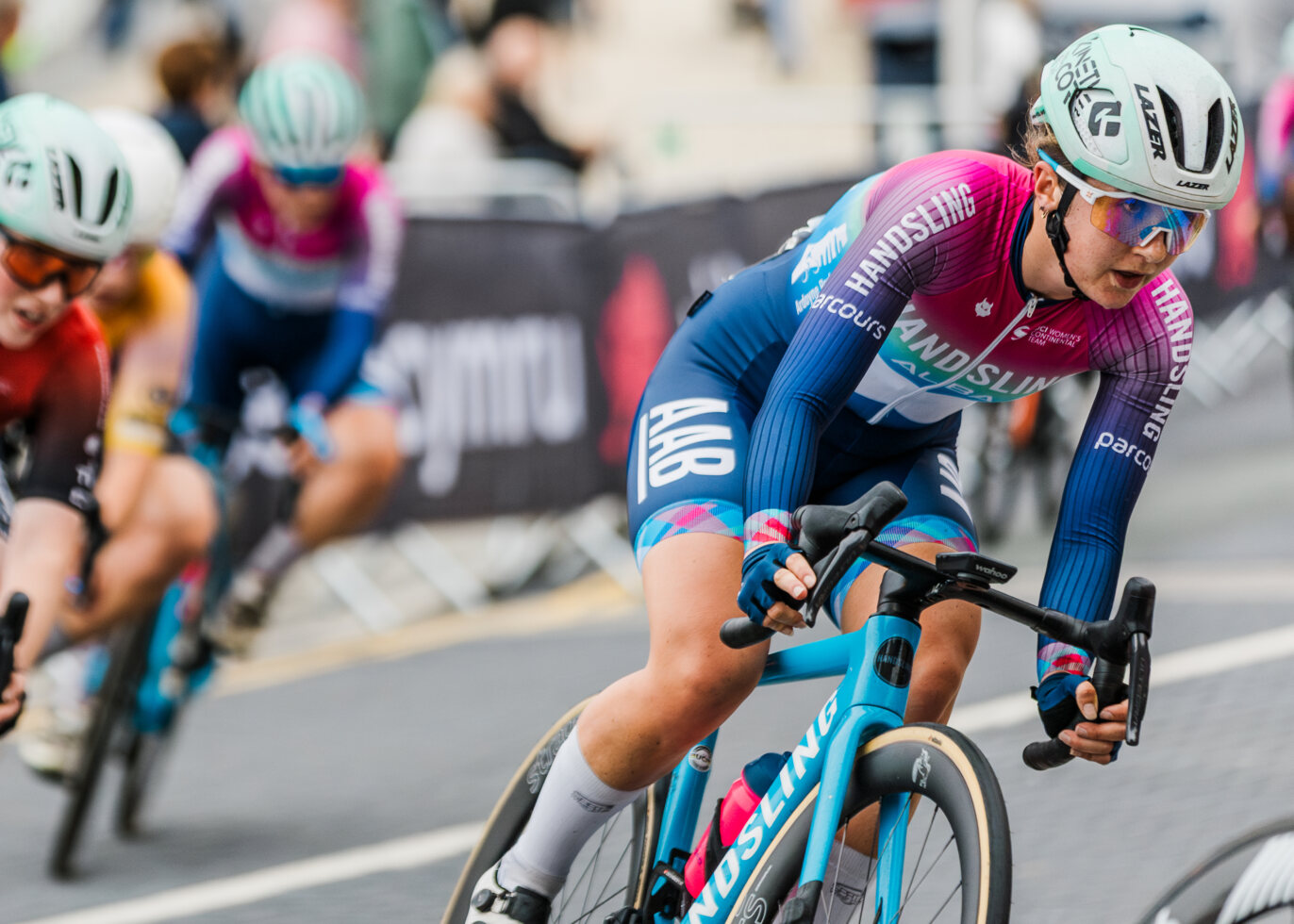
Part of the Handsling Alba Explains series — where our riders break down the basics and Team Manager Bob Lyons gives you the tactical inside line. In this article, we'll also hear from current British National Circuit Race Champion, Kate Richardson.
Hero photo: Andy Smith
What is a Criterium / Circuit race?
If you've ever watched a road race and thought cycling was hard to follow, a criterium — or crit — is a completely different experience. Also called a ‘circuit’ race, it is faster, louder, and contained on a course that lets you watch the whole thing unfold in front of you.
Handsling Alba’s Kate Richardson, current British National Circuit Race Champion after victory last year in Wales, explains:
Crits are just fast and technical. Those are the first words that come to mind when I think of a crit. They are very different than a road race as they are only an hour or so rather than 3 hours, so there is less of an endurance element and a lot more of a continuous effort for an hour.
In short: a criterium is a mass-start race held on a short, closed circuit — this can be anywhere from 800 metres to a few kilometres per lap — raced for either a set number of laps or a fixed time with laps added. They are shorter than road races usually are, lasting about an hour. Also, they are often part of a ‘series’ of events - in the case of Handsling Alba, most of the criteriums we take part in are part of British Cycling’s Lloyds National Circuit Series.
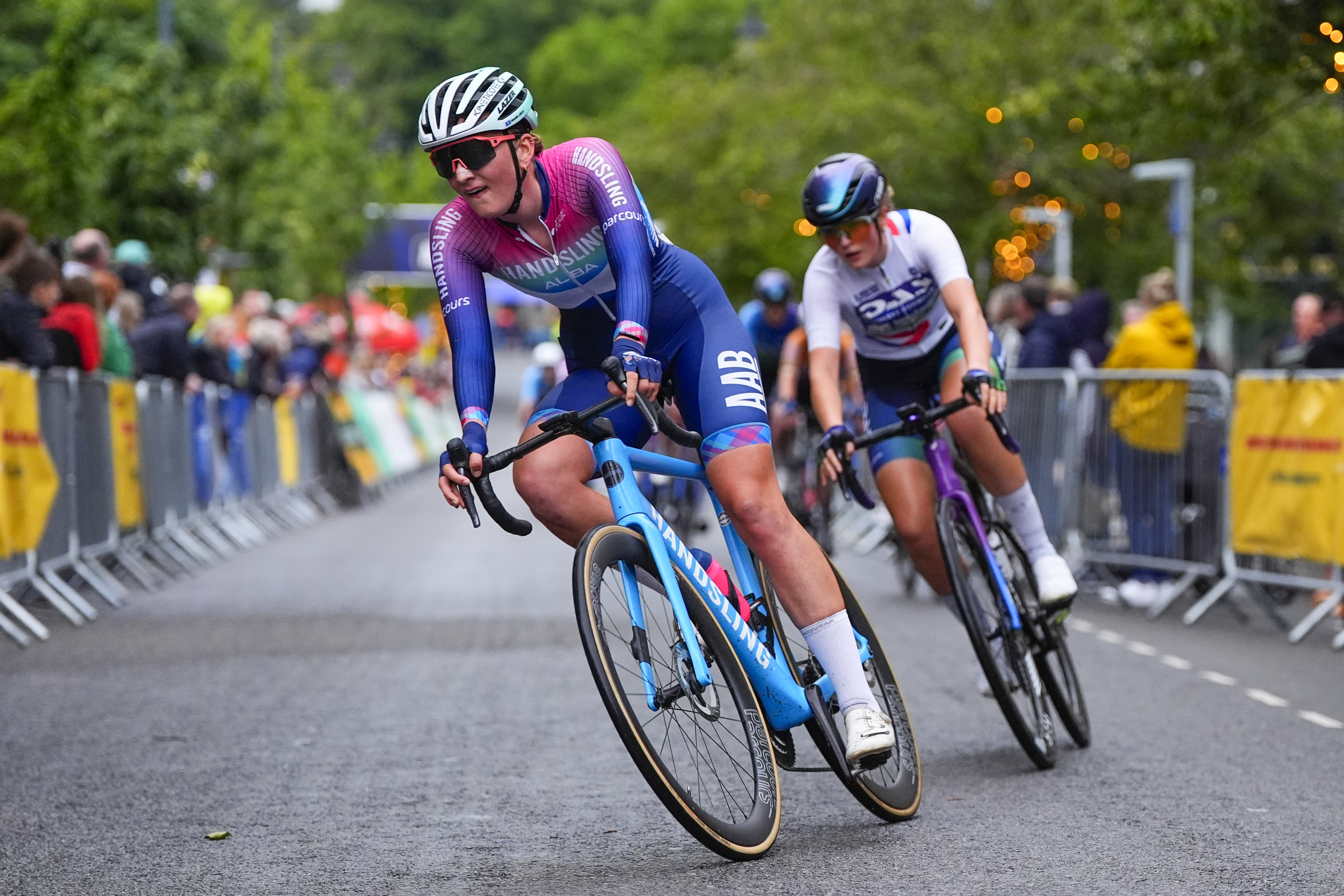
The course calls the shots.
In a road race, the bunch flows. In a crit, it concertinas. Every corner compresses the field, and coming out of it, requires a huge effort. Riders at the front can pick their lines but riders at the back are sprinting just to hold the wheel in front. Repeat dozens of times in a race and the energy cost is enormous — and that's even before anyone attacks or factoring in a rise/hill on course.
So when watching a crit, focus on the riders on the front or just off the front who are using the draft of riders in front, as they are conserving energy and keeping a much safer position.
Laps, the bell and how the finish works.
New to watching crits? Kate explains how the race ends:
When you’re approaching the last laps of a crit, the organisers will ring a bell. Normally how a crit works is you’ll race for a duration of 50 minutes or however long the race states at the start. Then when they ring the bell you normally have 3 or 5 laps to go. It seems confusing at first but when you’re there it makes sense.
A few other things to watch for:
Lapped Riders - Should a rider get lapped by the leading group, then they can not impede the lapping riders and they can’t have any impact on the outcome of the race (so can’t draft lapping riders). Also, if a rider is ‘retiring’ from the race, they must do so via the Pit Area.
Blue Flag - At some crits, you may also see a Blue Flag shown to some riders. Riders shown the Blue Flag must continue to the end of the race to contest the sprint, but have to keep left to allow the leading riders to pass.
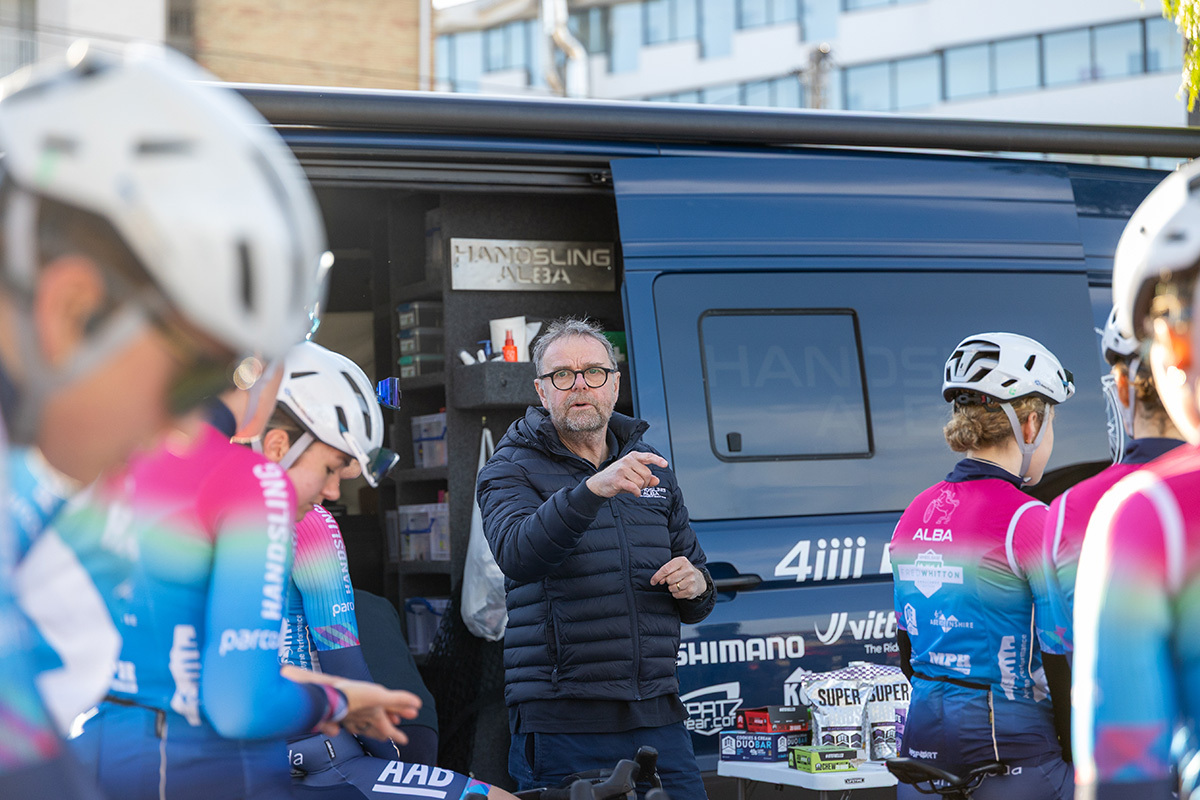
Bob’s Tactical Breakdown
Team Manager Bob Lyons has directed hundreds of criterium races at every level of the domestic and international calendar. Here's how he approaches them.
Start with the objective.
Tactics will depend on the overall objective, so that needs to be defined first. Clearly, we want to win, but how?
For Bob, there are three distinct tactical situations depending on what the team is trying to achieve:
Winning from a sprint. "If we want to win from a sprint, we need to protect our sprinter, keep the race together, and control or cover any breaks." This is the most reactive mode — the team's job is to neutralise threats rather than create them, saving the sprinter for the moment that matters.
Winning from a break. "If we want to win from a break or reduced group, we need to attack repeatedly and create splits. We also need to follow any move." This is the aggressive mode — it costs more energy across the team, but suits riders who can bring the hurt in short, sharp efforts or maybe don't want to risk a bunch sprint.
Rider development. "If we are developing riders, they are given free rein — attack, position, make mistakes, and learn." This is what makes Handsling Alba different. Not every race is about the result, so sometimes the objective is giving a rider the experience of making decisions under pressure, and the outcome is secondary.
What the course tells you.
Before tactics come from the team, they come from the road itself. Bob looks at three things:
Technical vs open. A tight, technical course with sharp corners rewards handling, power and positioning — it creates natural selection points where the bunch can split. A more open course with sweeping corners stays together longer and is more likely to end in a sprint.
Flat vs climbing. Even a short climb on a crit circuit changes the race entirely. It's a repeat effort, and it punishes riders who can't recover quickly. If there's a climb, expect it to be used as a point to bring the pressure — maybe every single lap.
Straight length. Long straights can favour teams with numbers, because they can drive the pace, reduce the bunch and can reposition. Short straights mean the race resets at every corner and positioning of individual riders becomes important with a fight into each corner or turn.
What makes a rider good at crits?
The physical demands of criterium racing are specific — and different to what makes someone a strong road racer:
- Bike handling and cornering — the foundation of everything else
- Punchiness — high short-duration power outputs
- Repeatability — the ability to recover quickly and deliver the same effort again and again and again…
- Bunch skills and energy conservation — good positioning means spending less energy than riders around you
- A good sprint — because many crits, even ones that get aggressive, come back together for a bunch finish
Kate confirms how important positioning is and how it is slightly different than a road race:
The first crit that I did was one of the Tour Series rounds back in 2022 and I sat at the back basically the whole race. I just found it so much harder. It took me half the race before I went to the front and I realised how much of an easier day out you have when you’re at the front. I haven’t made that mistake again. I realised that positioning is always key in a crit.
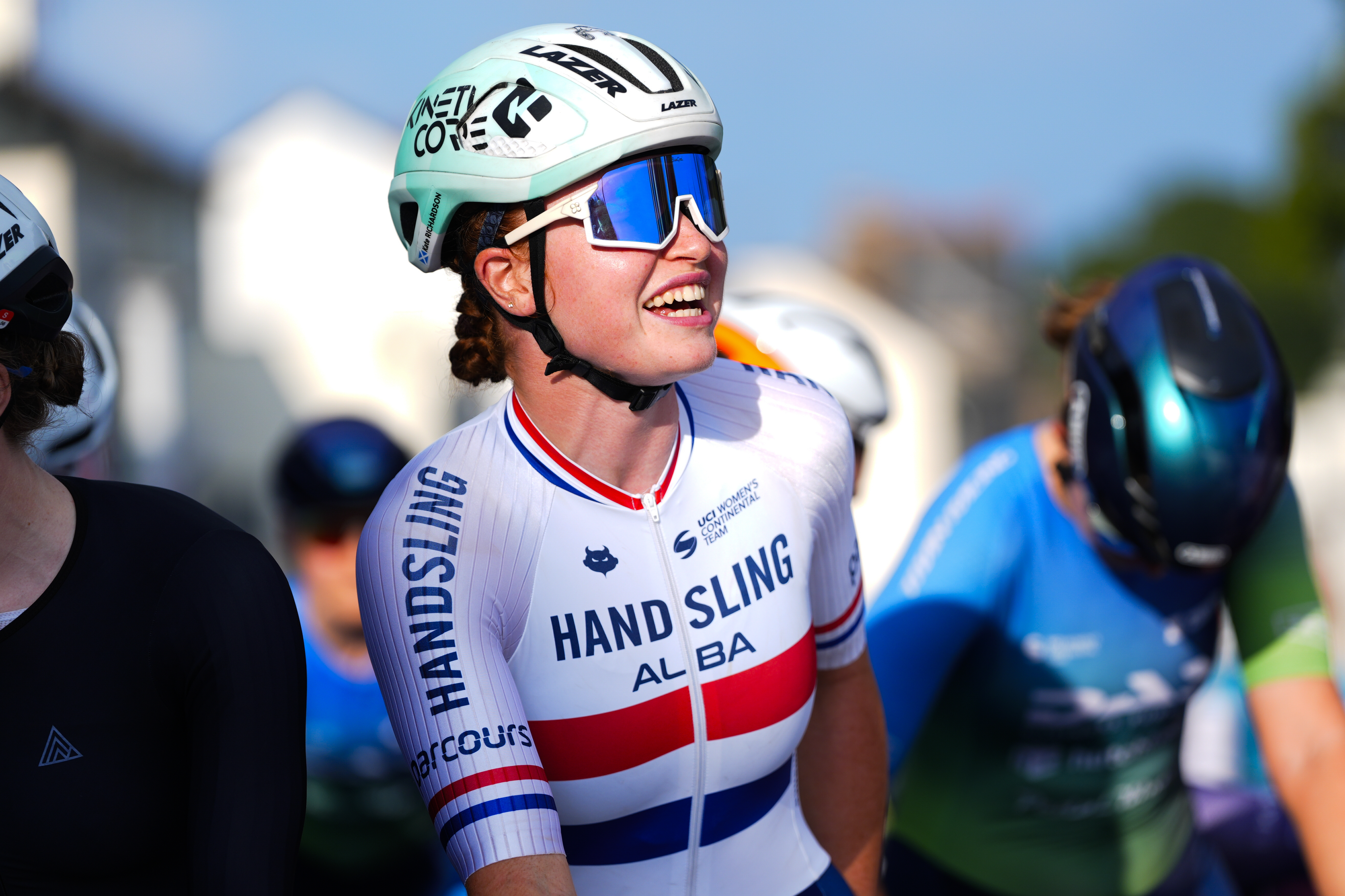
The British National Championships 2025 — how Kate won.
The best way to understand crit tactics is to see them applied. At the 2025 British National Circuit Championships, Kate Richardson gave Handsling Alba one of their standout results of the season. Here's how Bob approached it tactically:
Kate has a very good sprint. However, the nature of the course — tight and technical, leading into a very wide and straight run-in — introduced the challenge and risk of not being able to get her into position for the final, and leaving too much work to do.
So we elected for a sprint from a small group — turned out to be three — by instigating a break with an attack into the tight technical section at the end of the home straight.
The insight here: even a strong sprinter doesn't always benefit from a bunch sprint. The course read was that a wide, straight run-in would create a congested, unpredictable finish. Kate's sprint in a group of three was a safer and more controllable option than trying to navigate a large bunch in the final metres.
The result: a small lead group, a controlled sprint, a national title.
The fundamental difference — and the similarity.
Road racing and criterium racing share the same tactical logic at their core. As Bob puts it:
Fundamentally, the process is the same — just there are more tactical options in a road race.
The longer duration of a road race, its varied terrain, and the ability to shed riders on climbs or in echelons creates more complexity. A criterium compresses that complexity into a tighter space and a shorter time. Every decision gets made faster, every mistake is more costly, and every corner or climb is another chance to lose the race…or bring home the victory.
Want to cheer on Handsling Alba at their next crit?
Have a look at our race schedule as the team will be racing this summer in crits across the UK from London and Guildford to Otley, Ilkley and Sheffield...don't forget to bring your cow bell! 🔔
