
Handsling Alba Explains: Stage Racing
Part of the Handsling Alba Explains series, where our riders break down the basics and team director Bob Lyons gives you the tactical inside track.
Hero Photo Credit: Jakub Trmal
What is stage racing?
If a one-day race is a sprint, a stage race is a marathon spread across multiple days, with a winner decided not by a single finish line but by the lowest cumulative time across the whole event.
Every stage is its own race, with its own winner. But running alongside that is a separate competition, the “General Classification”, or GC, where the rider with the lowest total time across all stages wears the leader's jersey. You can win every stage and still lose the overall. You can win the overall without winning a single stage.
That dual structure with daily results sitting inside a bigger cumulative picture is what makes stage racing tactically distinct from anything else in the sport.
GC vs stage wins — what's the difference?
Handsling Alba rider Anna Flynn breaks it down:
The GC is the race for the overall title of the stage race and to win that you need to have the lowest overall time across all the stages. This tends to suit a more all-rounder who can climb really well, time trial well, but also make sure they're not missing any gaps in sprint stages. Whereas going for stage wins is when teams who maybe don't have a GC contender, or they're maybe out of contention in GC, may decide to go for more sprint stages or get in a breakaway to win a stage. So often teams will go in with different objectives depending on their rider's strengths.
That distinction shapes everything: team selection, race strategy, and how individual riders approach each day on the road.
The jerseys — what they mean and who wears them
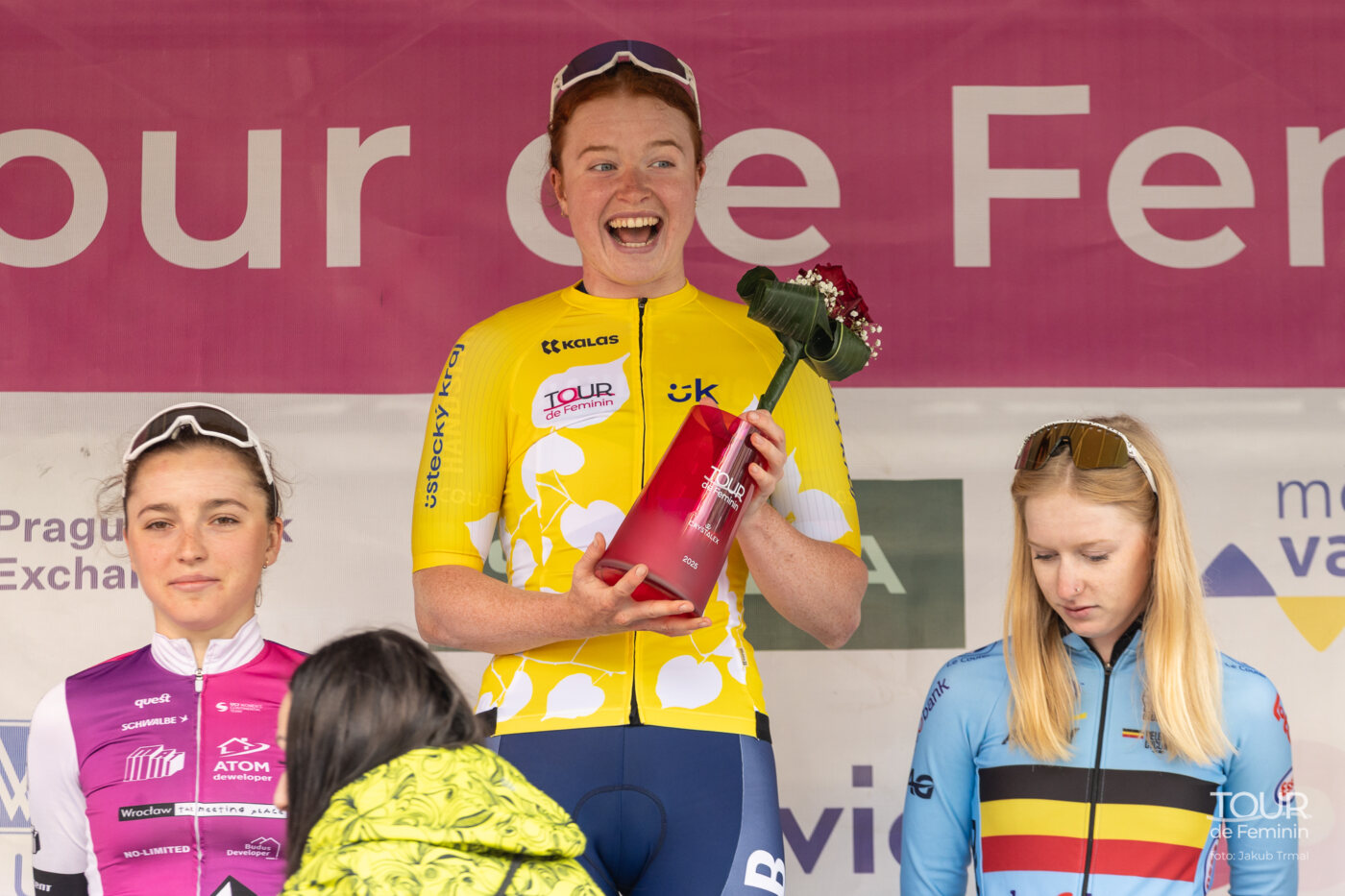
Stage races are famous for their jerseys, each representing a different competition running simultaneously within the same race. Handsling Alba rider Arianne Holland explains:
The yellow jersey is worn by the overall race leader, so that is your leader in the general classification, your GC jersey. The green jersey is the points jersey, worn by the person with the highest amount of points gained at intermediate and finish line sprints. This tends to be your sprinter's jersey. The polka dot jersey is your climber's jersey, worn by the rider with the highest amount of points awarded at the top of set climbs. And the white jersey is the young rider's jersey, worn by the young rider highest in the general classification.
One thing to note: jersey colours vary by race. The classifications Arianne covers above are the traditional Tour de France conventions, but other stage races use different colours for the same competitions - but many use the same as the Tour de France as well.
How time gaps work
In a one-day race or criterium, the result is simple: Whoever crosses the line first wins. In a stage race, time is the currency, and how you gain or lose it is more nuanced. Anna explains:
Time gaps are essentially the way the GC is decided. You can either go in a breakaway, getting away from other riders and finishing ahead of them on the stage, but also in a lot of stage races there are time bonuses at the finish. For the top three riders, first place gets 10 seconds, then it goes down to six and four. So you can also make up time on other riders just by consistently being in the top three at the end of stages.
That last point is worth delving into: A rider who never wins a stage but consistently finishes in the top three can pick up just enough time each day, or also accumulate enough time bonuses across a race to challenge for the overall. Stage racing rewards consistency as much as outright speed.
The biggest challenge — recovery
The physical demands of stage racing are unlike any other format in cycling. Arianne on what makes stage racing hard:
The biggest challenge in a stage race is recovery and fuelling, as we are racing every day for a set number of days. After the stage, it gets really important that we're taking on fuel and recovery as quickly as possible, and also ensuring that whilst we are recovering, we're also fuelling up again for the next day.
That recovery window between stages, often just 16 to 18 hours between finish line and start gun, is where stage races are won and lost as much as on the road itself.
Bob's tactical breakdown
Team director Bob Lyons has directed stage races at every level of the domestic and international calendar. Here's how he approaches them.
Start with the objective and build the team around it
In a criterium, the tactical objective can shift during the race. In a stage race, it needs to be defined before the team even gets on the bus.
Bob looks at three things first: the number and type of stages (time trials, flat, rolling, climbing); whether the team is targeting GC, individual stages, or a combination; and where the race fits into each rider's individual programme for the season.
The overall objectives shape the strategy, which in turn will dictate how the team needs to be balanced with clearly defined roles. Recovery and consistency also become important factors.
That last point is the fundamental difference from a one-day race. Bob says:
There are many similarities, but the emphasis changes. A stage race is all about cumulative performance, whereas a one-day race is about a single result.
GC rider vs stage hunter — different jobs, different characteristics
The rider characteristics Bob looks for depend entirely on the objective.
A GC contender needs to be consistent across every stage, never losing time to rivals on stages that don't suit them, while taking time on the stages that do. They typically need to climb well, time trial well, and handle every terrain the race throws at them. Crucially, as Bob notes:
A rider may win overall GC without actually winning a stage.
A stage hunter has a different approach. Their job is to identify the terrain that suits them, conserve energy on stages that don't, and arrive at their target stage in the best possible condition. They may deliberately ride within themselves for two or three days to be fresh when it matters - sometimes losing time in the GC standings purposefully before the target stage.
Reading the course
Before tactics, there's course analysis. Bob looks at five things:
- Overall stage profiles — understanding the character of each day
- Key climbs — where the race will be decided in the mountains
- The sequence of stages — the order of flat, mountain, and TT stages matters as much as each individually
- Finish type — sprint, uphill, or technical, each requires a different rider and different positioning
- Time bonuses — where seconds can be gained without winning outright
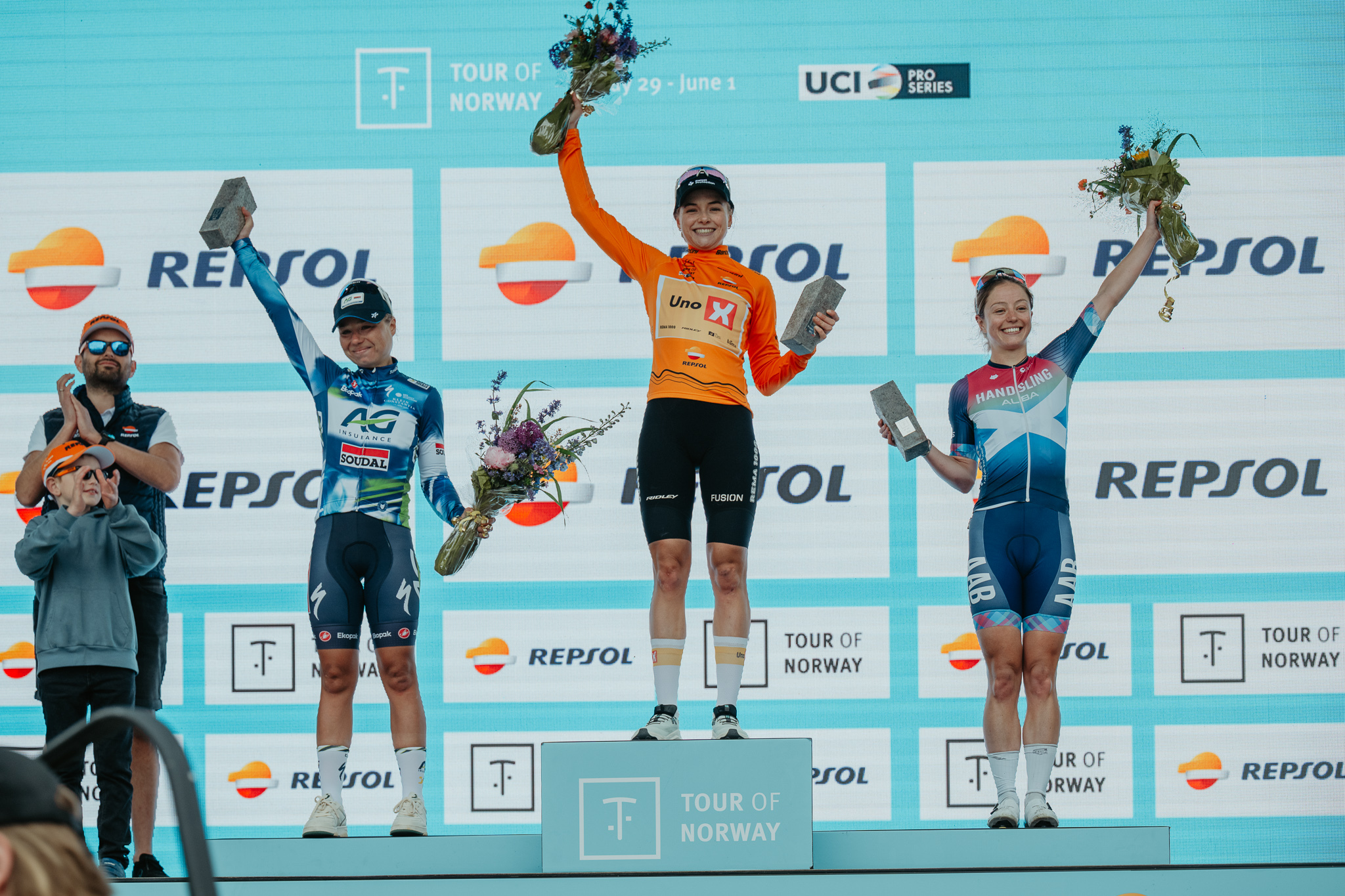
Tour of Norway 2025 — how Lauren Dickson finished 3rd on GC
The best way to understand stage race tactics is to see them applied across multiple days. At the 2025 Tour of Norway, Lauren Dickson delivered one of the team's standout results of the season. Bob walks through how it unfolded.
The key elements were the Queen stage and the final stage the day after. The Queen stage was where Lauren could take time and the most important climb of the day was the final climb to Heia. We expected the preceding two climbs to be ridden at a hard tempo which would thin out the bunch, but the race would be won or lost on the final climb. The critical objective was to keep Lauren safe in the early stages and deliver her to the foot of that final climb with the favourites.
It worked. Lauren finished second on the stage. Bob's assessment is characteristically precise:
She would probably have won the stage had she had another 50 metres.
The final stage brought a different challenge entirely:
It was a fairly flat, technical stage with crosswinds and a very technical finish in the city centre of Stavanger. The primary objective was simple: don't lose time to GC rivals by keeping Lauren at the front of the race.
One rider attacked solo on the technical run-in and gained enough time to take the overall from seventh on GC. Lauren held her position with the other contenders, finished eighth on the stage, and third overall.
The fundamental difference — and the similarity
One-day racing and stage racing share the same tactical logic at their core. The objectives, the course reading, the rider characteristics, all of it applies in both formats. What changes is the dimension of time.
In a one-day race, every decision is made for a single result. In a stage race, every decision is made with tomorrow in mind. Protecting a GC leader today might mean sacrificing a stage win. Attacking for a stage win might cost a rider the energy they need for the Queen stage three days later. Recovery, consistency, and cumulative performance sit alongside speed and power as the defining factors.
As Bob puts it:
The emphasis changes. A stage race is all about cumulative performance.
Want to cheer on Handsling Alba at their next race?
Have a look at our race schedule. The team will be racing this summer across the UK, along with one-day races in France and the Tour de Pologne stage race.
Enjoyed this? The Handsling Alba Explains series covers the tactics, skills, and insider knowledge of women's continental racing. Read more:
